
The SpaceX IPO, slated for H2 2026, targets a valuation between $1.5 trillion and $1.75 trillion. With Starlink reaching 10 million subscribers and projected revenues of $22 billion, the company trades at forward sales multiples exceeding 60x. Analysts are debating a potential “Terafab” merger with Tesla and xAI, while competitors like Rocket Lab (RKLB) battle for sector liquidity. Key risks include high entry multiples and post-IPO lock-up volatility.
I have spent decades navigating the volatile waters of Wall Street, and frankly, I have rarely seen a frenzy as palpable as the one surrounding the SpaceX IPO. It is April 2026, and the narrative that space is the “final frontier” for capital has shifted from a sci-fi trope to a concrete line item on institutional balance sheets. Ever since the first rumors of a confidential S-1 filing began leaking from the corridors of Goldman Sachs, the question I get asked most is: “Should I buy on day one?” My short answer is: proceed with extreme caution. My long answer? That is exactly what I will dissect in this deep-dive technical and fundamental analysis.
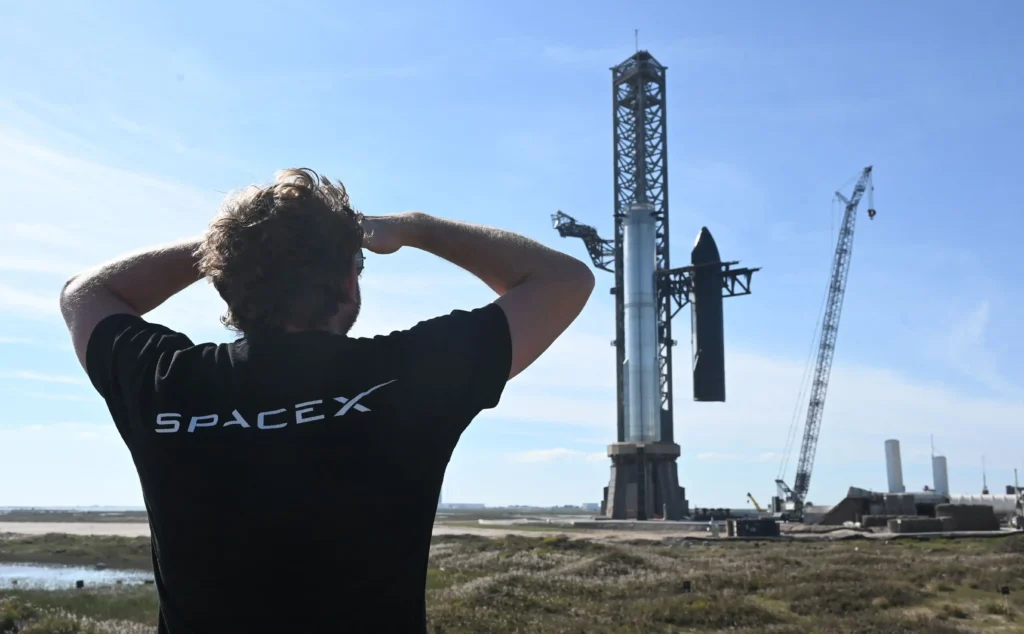
The SpaceX IPO is not merely the listing of a rocket company; it is the ultimate validation of a global connectivity infrastructure via Starlink and the long-term promise of an interplanetary economy fueled by Starship. However, as a senior writer and active investor, I have learned a painful lesson: great companies do not always make for great investments at their debut price. Let’s break down the numbers, the “Musk Holding” merger theories, and why, in my professional opinion, patience will be your greatest asset in this trade.
1. The 2026 State of SpaceX: Valuation and Fundamental Realities
To understand the SpaceX IPO, one must look far beyond Elon Musk’s social media presence. In 2026, SpaceX is no longer an experimental startup; it is a de facto monopoly on orbital launches in the Western world. With the Falcon 9 flying almost daily and Starship successfully completing its first “Mars-ready” orbital refueling tests, the company has driven the cost-per-kilogram to orbit down to levels that Boeing or Lockheed Martin simply cannot match.
Currently, the secondary market values SpaceX in the $1.25T to $1.5T range. If the IPO debuts at the $1.75 trillion mark suggested by lead underwriters, we are looking at a company that enters the public market with a higher valuation than almost every other tech giant, barring the “Trillion Dollar Club” (Apple, Microsoft, Nvidia).
The engine behind this valuation is not just the payload delivery business, but Starlink. As of February 2026, the satellite internet division hit the historic milestone of 10 million global subscribers. With a stable Average Revenue Per User (ARPU) and EBITDA margins beginning to mirror high-growth SaaS (Software as a Service) companies, Starlink is the “cash cow” funding the colonization of Mars. However, investors must realize the market is pricing SpaceX at over 60 times estimated 2026 sales—a multiple I find dangerously aggressive, even for a generational disruptor.
2. The Tesla-SpaceX-xAI Merger: Synergy or “Terafab” Fantasy?
One of the hottest topics this year is the potential creation of a “Musk Holding Company,” integrating Tesla, SpaceX, and xAI. The rumor gained institutional traction with the announcement of the Terafab Project—a massive AI-driven manufacturing initiative utilizing Tesla’s robotics, xAI’s compute power, and SpaceX’s Starlink for global low-latency command and control.
Is a Merger Viable?
From an operational standpoint, the synergies are undeniable. Tesla requires constant connectivity for its Full Self-Driving (FSD) fleet in remote areas—a problem Starlink solves. SpaceX requires the battery and high-performance electric motor technology pioneered by Tesla. However, from a legal and governance perspective, a merger would be a regulatory nightmare.
- Conflict of Interest: Tesla (TSLA) shareholders would likely challenge the dilution of their stakes to fund the high-risk, long-term Mars missions.
- Multiple Compression: Tesla is already struggling with the valuation “identity crisis” of being a car manufacturer vs. an AI company. Mixing in a high-growth space infrastructure play could mask the inefficiencies of both entities.
In my view, a direct merger is a low-probability event in the short term. What we will see instead is deep cross-licensing and exclusive service agreements. For those tracking the broader 2026 AI IPOs, it’s clear that integrating AI into space logistics is the next frontier of value creation, but it doesn’t require a unified ticker symbol to be effective.
3. Market Comparisons: SpaceX vs. The Public Peer Group
To determine if the SpaceX IPO price is justified, we must examine the incumbents. The landscape has shifted dramatically since the 2022-2024 downturn.
| Company | Est. Market Cap (2026) | Forward P/S Ratio | Core Focus |
| SpaceX | $1.75 Trillion | 65x | Heavy Launch / Starlink |
| Rocket Lab (RKLB) | $30 Billion | 33x | Small-Medium Launch / Neutron |
| Boeing (BA) | $110 Billion | 1.2x | Legacy Aero / Defense |
| AST SpaceMobile (ASTS) | $12 Billion | 18x | Direct-to-Cell Connectivity |
As the table illustrates, Rocket Lab is the closest technological peer. While RKLB has scaled impressively with the success of its Neutron rocket, it still trades at nearly half the sales multiple that SpaceX is targeting. This indicates a massive “Musk Premium” baked into the entry price, which historically leads to significant volatility for retail investors.
4. The IPO Process and Retail Allocation: A New Paradigm?
Unlike traditional IPOs where 90% of shares are snatched up by institutional whales like BlackRock or Vanguard, SpaceX is signaling a shift. Rumors from The Wall Street Journal suggest that Morgan Stanley, via its E*Trade platform, is negotiating a 30% allocation for individual investors.
The process will follow the standard SEC (Securities and Exchange Commission) roadmap:
- S-1 Filing (Public Release): Expected in early Summer 2026.
- The Roadshow: Two weeks of intense pitching to institutional desks to gauge price appetite.
- Pricing and Debut: The final price is set the night before, likely under the ticker $SPACE or $SPX.
Current sentiment suggests the IPO will be 10x oversubscribed. This almost guarantees a “pop” on day one—a price spike of 20% to 40% driven purely by hype rather than fundamentals.
5. My Personal Opinion: Why I Am Not Buying the IPO
This is where I part ways with the blind optimism of the “diamond hands” crowd. I do not like buying into hyped IPOs. Period. Historically, the public debuts of ultra-high-profile companies serve as an “exit ramp” for Venture Capitalists and early employees who want to realize gains by selling to enthusiastic retail investors.
“Enthusiasm is the enemy of the rational investor. In an event like the SpaceX IPO, you aren’t buying the future of Mars; you are buying the exit for someone who invested in 2015.”
My strategy is simple: wait for the dust to settle. Typically, after the lock-up period expires (usually 6 to 12 months after the IPO, when insiders are finally allowed to sell), the market faces a natural wave of selling pressure. This is when the 60x sales multiples are tested against real, quarterly earnings reports.
We saw this play out with Meta (Facebook), Uber, and even Saudi Aramco. They debuted at astronomical valuations, dropped 30-50% in the following months as the “hype premium” evaporated, and only then provided a solid entry point for long-term growth. I would much rather miss the first 10% of a rally than risk a 50% drawdown by buying at the peak of the euphoria.
6. Competitors: Where the Liquidity Might Flow Instead
If the SpaceX IPO is deemed too expensive, where will the “Space Gold Rush” money go?
- Rocket Lab (RKLB): The logical alternative. They have proven execution, and the Neutron rocket is a direct competitor to the Falcon 9 for satellite constellation deployments.
- Intuitive Machines (LUNR): If your interest lies in the lunar economy, they hold more direct NASA contracts for surface infrastructure.
- Legacy Defense (Lockheed Martin): These companies may benefit if SpaceX is forced to open its books and reveals that military contract margins aren’t as lucrative as once thought.
FAQ: Frequently Asked Questions about the SpaceX IPO
When will the SpaceX IPO take place?
Current projections point to the tail end of Q2 or the beginning of Q3 2026, contingent on SEC approval and market stability.
What will be the SpaceX stock price?
While the per-share price depends on the final share count (split ratio), the total valuation targeted is between $1.5T and $1.75T.
Is it worth buying SpaceX on the first day?
In my professional opinion, no. Large-scale IPOs are notoriously volatile. Waiting for the lock-up expiry often reveals a much more attractive entry point.
Will SpaceX merge with Tesla?
There are no official plans for a merger. Despite the technological synergies, regulatory hurdles and the distinct capital structures of both companies make a full consolidation unlikely in 2026.
Conclusion: A Pragmatic View of the Stars
The SpaceX IPO will undoubtedly be the financial event of the year. It represents the pivot of space from a government-funded expense to a private-sector profit engine. However, as investors, our duty is not to admire the rockets, but to protect our capital.
My technical analysis suggests that at current targeted multiples, the downside risk outweighs the probability of an immediate gain. The 2026 market is sophisticated, and while AI and global connectivity are real value drivers, 65x sales requires absolute perfection in execution. Any failure in a Starship launch or a slight dip in Starlink subscriber growth will severely punish those who bought on the day of the listing.
I will be staying on the sidelines for “Day 1.” I’ll watch the volume, analyze the first two quarterly reports as a public entity, and wait for the “Musk Premium” to stabilize. The universe may be infinite, but your capital is not. Invest with your head, not with the adrenaline of a countdown.
Related posts:
 The Civil War at the Federal Reserve: Is Jerome Powell’s Resistance the Last Stand for Economic Stability?
 Trade War 2.0 Greenland: How to Shield Your Portfolio Against New NATO Tariffs and Arctic Volatility
 The Greenland Crisis: How Trump’s New Tariffs Could Wreck Your Tech Portfolio Today
 2026 AI IPOs: The Triumph of FOMO or the Next Dot-Com Burst?