
As of early 2026, Tesla has successfully pivoted from a legacy EV manufacturer to the backbone of Physical AI Infrastructure. Reporting $4.4 billion in 2025 operating income despite a cyclical automotive downturn, the company is now scaling its high-margin software verticals. With unsupervised Robotaxi operations beginning in Austin and the Optimus Gen 3 entering low-rate initial production, Tesla is attacking a $30 trillion combined TAM. The current 150x Forward P/E reflects a fundamental misunderstanding of Tesla’s transition from hardware sales to recurring SaaS and RaaS (Robotics-as-a-Service) revenue.
I have spent decades analyzing the ebbs and flows of the capital markets, and rarely have I witnessed such a profound cognitive dissonance between traditional valuation metrics and technological reality as I do today. We are standing in 2026, and the “bears” are still debating delivery numbers while the “bulls” are watching the birth of a new industrial era.
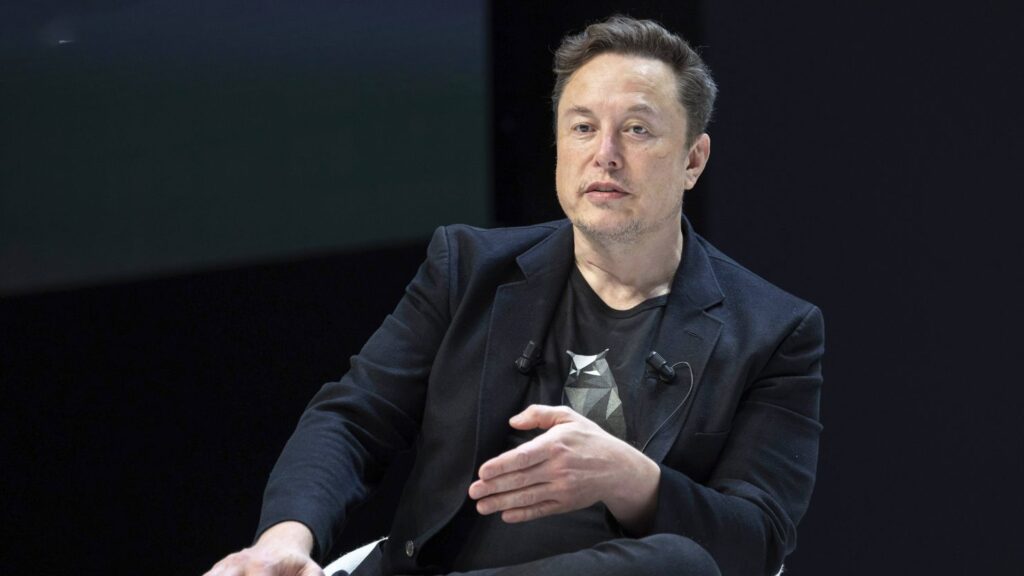
My personal stance on Tesla stock remains one of disciplined conviction: I do not currently hold a position, but I am actively looking to deploy capital on any significant correction, irrespective of the triple-digit P/E ratio. In the world of exponential technology, P/E is a rearview mirror metric; it tells you where the company was, not where the autonomous, roboticized future is going.
1. The Great Mutation: Beyond the “Car Company” Narrative
The fundamental error of Wall Street was treating Tesla as a cyclical automotive OEM. The Q4 2025 earnings report was the final nail in that coffin. Tesla is an AI Physical firm. This isn’t just corporate jargon; it’s a structural reality supported by a $44.1 billion cash fortress.
- Vertical Integration as a Moat: While Chinese competitors compete on the cost of plastic and steel, Tesla is vertically integrated at the silicon level. The deployment of the Cortex 1 cluster in Texas, utilizing over 100,000 H100 equivalents, has created an insurmountable lead in neural network training.
- The xAI Synergy: The strategic $2 billion investment in xAI creates a feedback loop where large language models meet physical world navigation. This synergy allows Tesla’s vehicles and robots to “understand” context, not just recognize pixels.
2. Full Self-Driving (FSD): The World’s Most Valuable Software Stack
Is Tesla’s autonomy the most advanced? In 2026, the data says yes. With 1.1 million active FSD subscribers and a cumulative 9 billion miles driven, Tesla owns the largest real-world video dataset in existence.
- Licensing: The “Windows” Moment: I expect Tesla to announce its first major FSD licensing deal with a legacy European or Japanese OEM by year-end. This transforms the business model from a $50,000 one-time hardware sale to a $200/month high-margin recurring revenue stream.
- Operating Leverage: Software has near-zero marginal cost. As FSD licensing scales, we will see a massive compression in operating expenses relative to revenue, driving EPS (Earnings Per Share) to levels that will make a 150x P/E look like a bargain.
3. Robotaxis: The End of Uber and the Disruption of Last-Mile Logistics
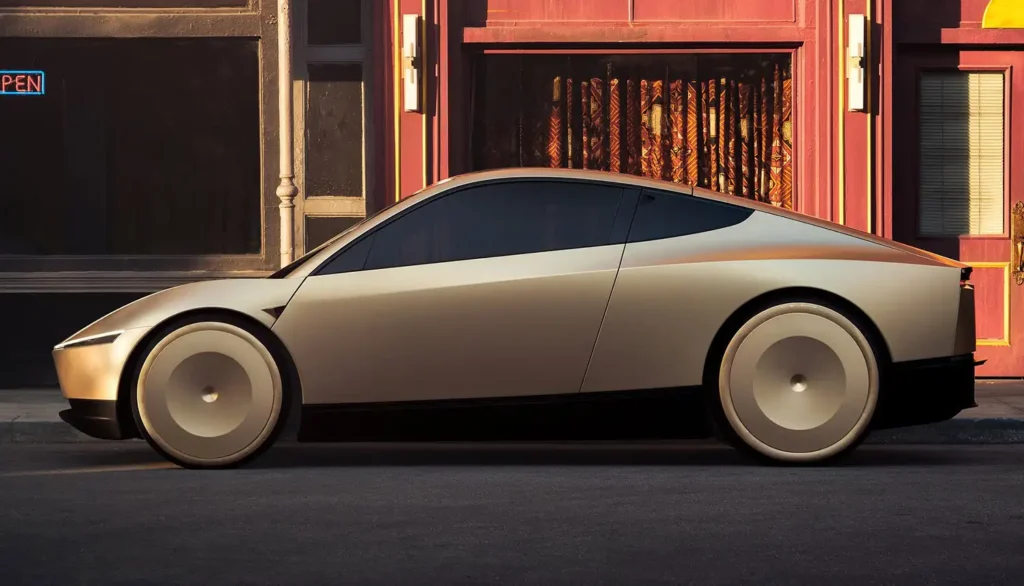
The announcement that Tesla began removing safety monitors from its Robotaxis in Austin in January 2026 was the starting gun for the greatest logistical disruption in history.
- Creative Destruction: Why would a consumer pay for an Uber when a Tesla Robotaxi can complete the trip at a fraction of the cost, available 24/7?
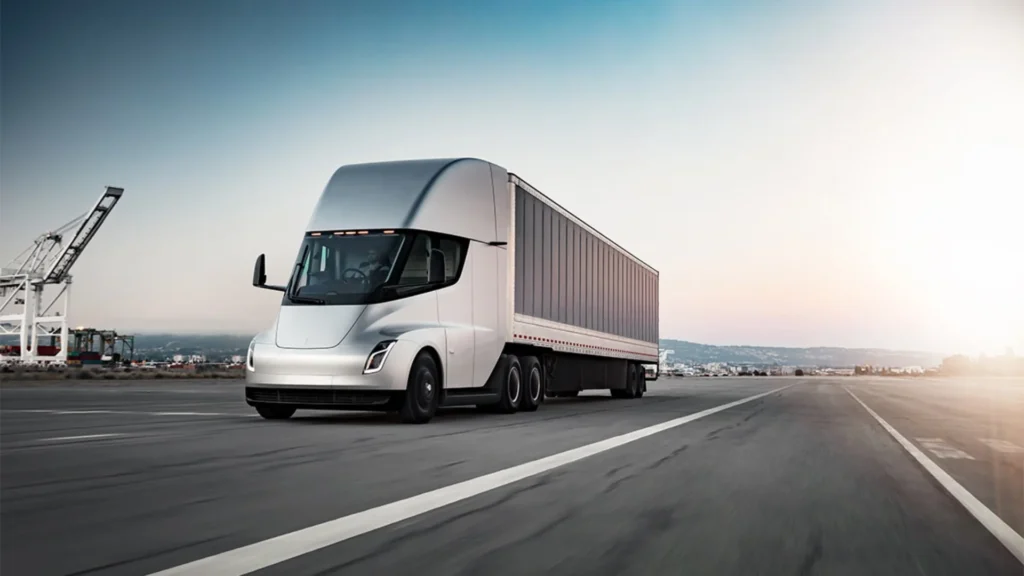
- The Freight Sector: With the Tesla Semi entering volume production in 2026, companies like UPS and FedEx face an existential dilemma. They either adopt Tesla’s technology or lose out to those who do. The cost-per-mile of autonomy is simply unbeatable.
- The End of the Professional Driver? It is a harsh reality: professional drivers are becoming obsolete. The efficiency of a system that doesn’t sleep, doesn’t get sick, and doesn’t make human errors is the ultimate economic argument that will swallow this sector.
4. Tesla Energy: Powering the AI Gold Rush
While the headlines focus on cars, the Energy division grew at a 27% CAGR in 2025, deploying a staggering 46.7 GWh. In an era where Microsoft, Meta, and Amazon are desperate for stable power for their AI data centers, Tesla is the primary provider of “grid insurance.”
- Megapack 3 and the Grid: The 2026 Houston ramp of Megapack 3 positions Tesla as a de facto utility.
- Space-Based Synergies: The potential for space-based solar arrays and orbital energy storage—leveraging SpaceX’s Starship—is no longer science fiction. Tesla’s expertise in energy density makes them the only logical partner for managing power in the burgeoning orbital economy.
5. Optimus: Solving the Global Labor Shortage
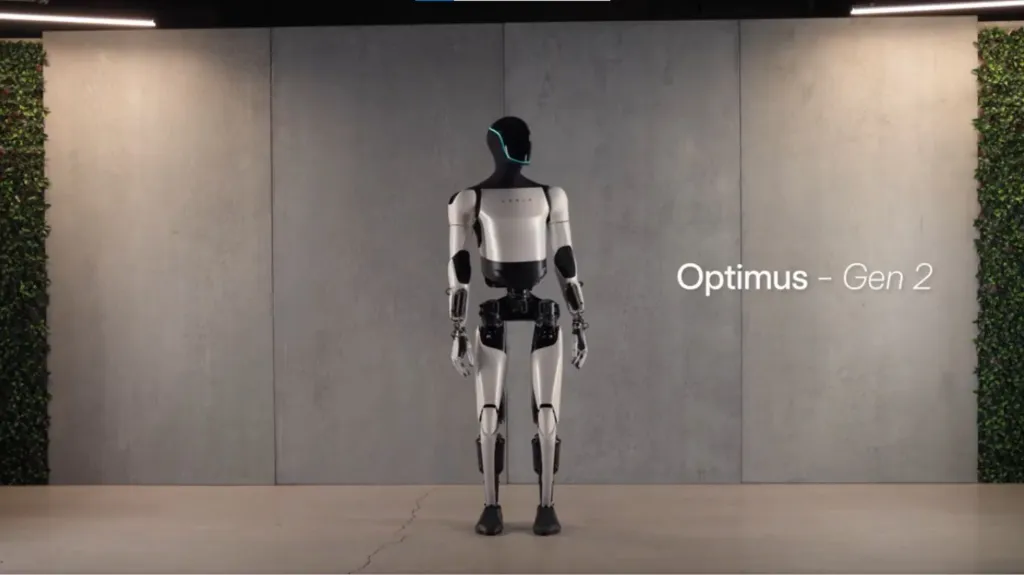
The Optimus Gen 3 robot is the “black swan” that could send Tesla’s valuation into the tens of trillions. Tesla is currently retooling for a 1-million-unit annual capacity.
- RaaS (Robotics-as-a-Service): Tesla won’t just sell you a robot; they will lease you “labor.” At a target cost of $10-$15 per hour of labor, Optimus can replace humans in dangerous or repetitive tasks across the $100 trillion global GDP.
- The Competitive Moat: China can build a cheaper motor, but they cannot build a more intelligent brain. Optimus uses the same “End-to-End” AI stack as the cars. It has already “seen” the world through billions of miles of Tesla driving data.
Key Metrics Comparison: 2021 vs. 2025 (Official Data)
| Financial/Operational Metric | 2021 (The EV Hype) | 2025 (The AI Reality) | Change (%) |
| Energy Storage Deployed (GWh) | 4.0 | 46.7 | +1067% |
| Cash & Investments ($B) | 17.7 | 44.1 | +149% |
| Active FSD Subscriptions (M) | 0.4 | 1.1 | +175% |
| Energy Gross Profit ($B) | ~0.5 | 1.1 (Q4 Record) | +120% |
| Supercharger Stations | 3,476 | 8,182 | +135% |
Frequently Asked Questions (FAQ)
Will Tesla stop being a car company to focus on robots?
Hardware remains the necessary vessel for the AI. However, the car is increasingly viewed as a “mobile computer on wheels.” While vehicle sales provide the cash flow, the software and robotics divisions will soon provide the vast majority of the net income.
How does Tesla’s system compare to Waymo’s?
Waymo is a “walled garden” requiring expensive LIDAR and HD maps. Tesla is “biological-scale” vision. Waymo is a train on invisible tracks; Tesla is an apex predator that can navigate any road, anywhere, without pre-mapping.
Will Tesla and SpaceX eventually merge?
A formal merger is unlikely due to regulatory and structural hurdles, but their technological fusion is already complete. Between Starlink (connectivity), Starship (logistics/energy), and Tesla (AI/robotics), Musk has created a vertically integrated civilization-building machine.
Conclusion: The Price of Tomorrow
Investors often confuse “price” with “value.” At a 150x P/E, Tesla is priced for a future that many believe is impossible. But as I look at the 46.7 GWh of energy deployed and the first unsupervised Cybercabs roaming the streets of Austin, I see a future that is already here.
As stated, I am waiting for a market-wide “risk-off” event to initiate my position. I want the volatility. I want the panic from those who only read balance sheets and ignore the code. If Tesla captures even 20% of the autonomous transport and labor markets, the 150x P/E of today will be remembered as the greatest buying opportunity of the decade.
To understand how 2025 set the stage for this leap, I recommend my analysis of the 2025 results for Microsoft, Meta, and Tesla. For the official data supporting this thesis, consult authoritative reports from ARK Invest
or the Tesla Investor Relations portal.
Disclaimer: This article is based on audited financial data and operational projections from Tesla’s Q4 2025 report. Investing in equities involves high risk. This is not financial advice; please consult with a professional advisor before making investment decisions.
Related posts:
 The Civil War at the Federal Reserve: Is Jerome Powell’s Resistance the Last Stand for Economic Stability?
 Trade War 2.0 Greenland: How to Shield Your Portfolio Against New NATO Tariffs and Arctic Volatility
 The Greenland Crisis: How Trump’s New Tariffs Could Wreck Your Tech Portfolio Today
 2026 AI IPOs: The Triumph of FOMO or the Next Dot-Com Burst?