
At the January 2026 FOMC Meeting, the Federal Reserve maintained interest rates at 3.50%-3.75%. Despite political pressure, Jerome Powell adopted a neutral stance, stalling expectations for an imminent cut. Two dissenting votes (Waller and Miran) signaled a rift over tariff-driven inflation versus AI-led productivity gains. Markets and the US10Y remained flat, reflecting an impasse between monetary rigor and unsustainable fiscal debt levels.
I must admit, I walked into this Wednesday with a sense of renewed—perhaps even naive—expectation that the Federal Reserve might finally succumb to the macroeconomic reality we are all feeling on the ground. However, the January 2026 FOMC Meeting proved to be a cold shower for those of us hunting for a dovish pivot from Jerome Powell. What we witnessed was a “steady as she goes” hold, keeping the federal funds rate in the 3.50% to 3.75% range. While the decision itself matched the consensus, it was delivered with a frustratingly neutral tone. Powell refused to open the door for further cuts, and this lack of commitment to easing—at a time when the economy is showing structural fissures—deeply concerns me as an analyst and investor.
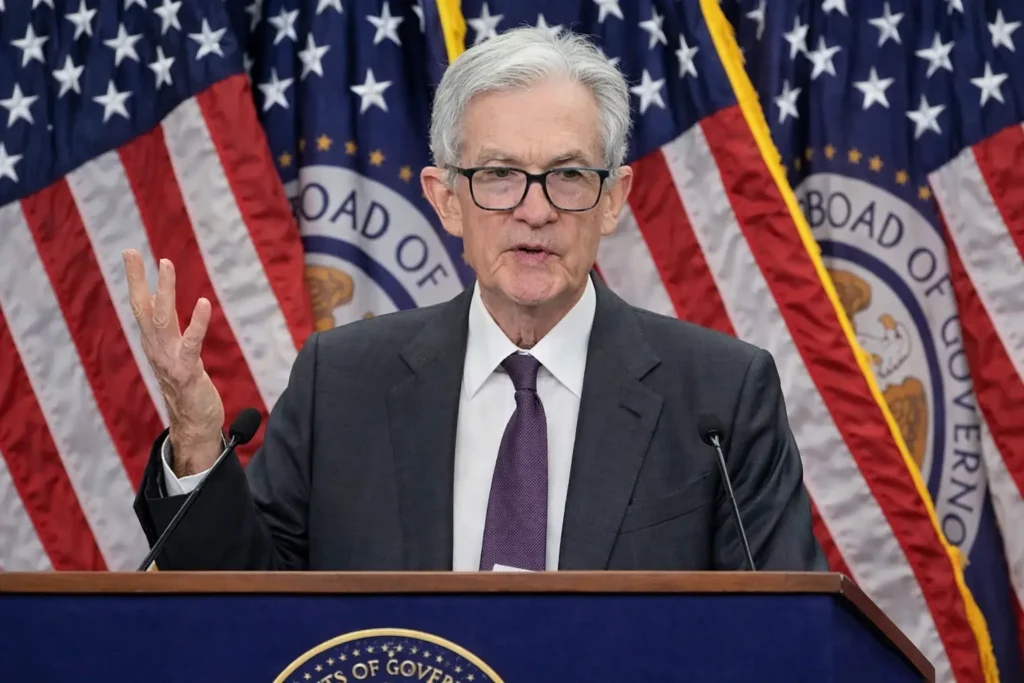
I sensed Powell was performing a high-wire act on an increasingly thin rope. On one hand, we have surging productivity driven by the massive implementation of Artificial Intelligence (AI); on the other, the specter of trade tariffs is inflating the cost of goods—not due to excess demand, but because of supply-side shocks. I expected him to acknowledge that current inflation is a “tariff mirage” and that rates should fall to stimulate capital investment. He didn’t. Instead, he clung to his “data-dependent” mantra, seemingly ignoring that 2026 data no longer follows the 20th-century economic textbooks.
1. The Anatomy of the Decision: Two Dissidents and a Deep Divide
The real shocker of this meeting wasn’t the rate hold itself, but the composition of the vote. We saw two heavyweight dissenting votes: Christopher Waller and Stephen Miran. Both voted for an immediate 25-basis-point cut. For those who track the Fed closely, a Waller dissent is a “code red” signal. He is often the barometer for the committee’s pragmatic, technical wing. By voting against the hold, Waller is explicitly telling us that the Fed risks falling “behind the curve” once again, unnecessarily suffocating economic momentum.
Miran, for his part, has been a vocal critic of maintaining restrictive rates in a landscape where federal debt service has become, in the words of the statement itself, unsustainable. I view this split as the reflection of a fragmented Fed. Powell seems to be trying to shield the institution’s independence—especially with the Trump v. Cook case currently before the Supreme Court—by maintaining a rigid stance to prove he won’t bow to White House pressure. However, this obsession with appearing independent may be coming at a steep cost to real economic growth.
2. The US10Y Standoff and the Market’s Chilly Reaction
If you look at the trading desks, the impact of the January 2026 FOMC Meeting was virtually nil. The market remained in a state of lethargy that reflects investor confusion. The 10-Year Treasury Yield (US10Y) didn’t budge, hovering around 4.22%. This is what I call the “silence of the lambs.” The bond market has already priced in the fact that Powell lacks the conviction to be aggressive in either direction.
| Financial Asset | Pre-Meeting | Post-Meeting | Change (%) |
| Fed Funds Rate | 3.50% – 3.75% | 3.50% – 3.75% | 0.00% |
| US 10-Year Yield | 4.22% | 4.21% | -0.01% |
| S&P 500 | 6,012 | 6,015 | +0.05% |
| DXY (Dollar Index) | 102.40 | 102.45 | +0.05% |
This stability is deceptive. I believe we are coiling spring-like energy for a sharp move. When volatility is this low following a major event, it is because the market is waiting for an external catalyst, likely from the fiscal front or the next round of inflation data capturing the full brunt of the new tariffs. If you want to understand how to position your portfolio in this era of uncertainty, I highly recommend reviewing our investment strategy for 2026.
3. The Inflation Mirage: Tariffs vs. Demand
One of the most intriguing passages of Powell’s press conference was his analysis of inflation. He admitted that a significant portion of the price increases in goods stems from trade tariffs. However, he categorized this as “good news” because these are one-off shocks that should eventually drop out of the year-over-year calculations. I fundamentally disagree with this optimistic view. Tariffs are not just a “one-off shock”; they re-engineer supply chains and structurally raise the cost of living.
By keeping rates high to combat inflation generated by import taxes, the Fed is effectively punishing the consumer twice. First, the consumer pays more for the imported product; second, they pay more for credit. Powell ignored the fact that demand is not the problem. The economy isn’t “overheating”; it is being strangled by supply costs. This failure to differentiate between demand-pull inflation and cost-push inflation is, in my view, the Fed’s greatest analytical blunder of 2026.
4. The IA Impact and the “K-Shaped” Reality
We cannot discuss the January 2026 FOMC Meeting without mentioning productivity. The Fed acknowledged that AI adoption is allowing firms to maintain profit margins despite higher input costs. This creates a K-shaped economy. On one side, Big Tech and firms intensive in high-skilled human capital are soaring, riding the efficiency wave of AI. On the other, small businesses and service-sector workers are being crushed by interest rates and inflation.
Powell seems content to look at macroeconomic aggregates, but these aggregates mask a brutal divergence. I see a real risk of stagnation for the bottom of the economic pyramid while the top continues to inflate financial assets. By not cutting rates, the Fed is accelerating this inequality gap, as only companies with massive cash reserves (which earn high interest) can afford to invest in the technological transition.
5. Political Pressure and the Lisa Cook Supreme Court Case
The elephant in the room throughout the meeting was the tension between the Fed and the Trump administration. With the legal battle over the legality of firing Fed governors—specifically the Lisa Cook case—reaching the Supreme Court, the institution’s autonomy is under direct assault. I feel that Powell’s neutral, almost “robotic” posture today was a desperate attempt to show that the Fed will not be intimidated by subpoenas or restructuring threats.
However, politics and economics are inseparable. The legal uncertainty regarding who actually controls the Fed creates a risk premium in bonds that Powell cannot ignore. If the Supreme Court rules that the President can fire governors “at will,” the credibility of the US Dollar as a store of value could be compromised. For more details on these official communications and the Fed’s formal stance, you can consult the official Federal Reserve website.
FAQ: Frequently Asked Questions about the FOMC Meeting
What was the outcome of the January 2026 FOMC Meeting?
The Federal Reserve decided to keep the federal funds rate unchanged at 3.50% to 3.75%. The decision was not unanimous, featuring two dissenting votes calling for a 25-basis-point cut.
Who were the dissenters and why did they vote against the hold?
Christopher Waller and Stephen Miran were the dissenters. They argued the Fed is being overly restrictive in the face of AI productivity gains and that current inflation is caused by supply-side factors (tariffs) that do not respond to monetary tightening.
How did the markets and US10Y yields react?
The reaction was one of absolute neutrality. The S&P 500 and the DXY ended the day with minimal changes, while the 10-Year Treasury Yield (US10Y) remained stable at 4.22%, signaling a market that had already anticipated Powell’s lack of direction.
Conclusion: The Price of Indecision
Ultimately, the January 2026 FOMC Meeting will be remembered as the meeting of indecision. I expected a bolder Jerome Powell—someone who could read between the lines of a shifting economic paradigm. Instead, we got a neutral tone that, in practice, functions as a disguised hawkish stance. By not opening the door for cuts, Powell is signaling that he is comfortable watching the economy cool to the point of breaking.
In my opinion, the Fed is making the classic mistake of driving while looking in the rearview mirror. They are so paralyzed by the fear of repeating the 2021 error (when they let inflation run too high) that they now risk the opposite: causing an unnecessary recession in an economy already brittle from fiscal debt. Maintaining rates at this level amidst unsustainable debt is a recipe for long-term disaster. The market may have been flat today, but the pressure beneath the surface is mounting. I recommend extreme caution: today’s neutrality may well be tomorrow’s explosive volatility.
Related posts:
 The Civil War at the Federal Reserve: Is Jerome Powell’s Resistance the Last Stand for Economic Stability?
 CPI Predictions Today and the Reality Shock: Why I Believe We Are Entering an Unprecedented Deflationary Era
 Trade War 2.0 Greenland: How to Shield Your Portfolio Against New NATO Tariffs and Arctic Volatility
 The Greenland Crisis: How Trump’s New Tariffs Could Wreck Your Tech Portfolio Today