In 2026, the rise of predatory HFT algorithms has turned the traditional stop loss into a liability by facilitating institutional “liquidity sweeps.” Drawing from Nassim Taleb’s principles of antifragility, this analysis argues that fixed exits make portfolios fragile to market noise. Conversely, hedging serves as a robust alternative, capping losses without realizing them prematurely, thus allowing positions to recover during mean-reversion cycles. Data indicates that strategic hedging offers superior risk-adjusted returns in high-volatility regimes.
As we navigate the hyper-liquid and AI-driven financial landscape of 2026, the fundamental question of capital preservation has shifted from if we should protect our trades to how we do it without being exploited. I have spent years observing the evolution of market microstructure, and I can say with certainty that the retail obsession with the stop loss is one of the most significant tactical errors of the modern era. In today’s environment, where generative AI models and sub-millisecond execution dominate the tape, a hard stop loss is often nothing more than a beacon for institutional sharks.
In this deep dive, I will dismantle the conventional wisdom surrounding trade exits, introduce you to the revolutionary risk philosophy of Nassim Taleb, and explain why I have largely abandoned the stop loss in favor of strategic hedging.
1. The Microstructure of 2026: The Era of Predatory Liquidity
To understand why I don’t use stop losses, one must first understand the concept of Stop Hunting. In 2026, large-scale institutional players—investment banks, “dark pools,” and high-frequency funds—operate with a single objective: the search for deep liquidity. They do not care about your “support and resistance” lines; they care about the massive clusters of sell orders (stops) sitting just below them.
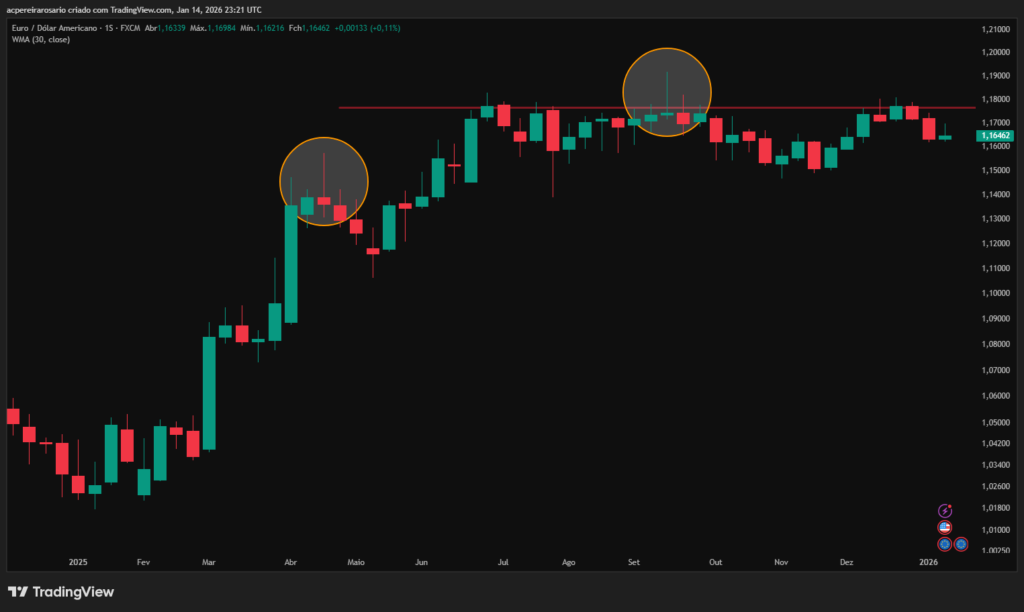
When I analyze the order flow in the current market, I see a recurring pattern. Price moves aggressively toward a psychological level, triggers a cascade of stop losses, and then—almost magically—reverses and rockets in the original direction. This is not magic; it is the liquidity sweep. By placing a hard stop loss, you are essentially providing a mandatory “fill” for a large player at the worst possible price for you. In the US equity and FX markets of 2026, these stop-hunting algos have become so precise that they can sniff out retail stop-clusters with terrifying accuracy. By using a stop loss, you are surrendering your optionality to the market’s most aggressive participants.
2. Nassim Taleb and the Philosophy of the Antifragile Trader
My transition away from mechanical exits was heavily influenced by the work of Nassim Nicholas Taleb. For those unfamiliar, Taleb is a former derivatives trader and the author of the Incerto series, a collection of works including The Black Swan and Antifragile. His core thesis revolves around how systems handle disorder and volatility.
The Fragility of the Hard Stop
Taleb defines a system as fragile if it is harmed by volatility and has a clear point of failure. A trade protected only by a stop loss is inherently fragile. You are setting a “breaking point” where a temporary fluctuation—what Taleb calls noise—becomes a permanent, realized loss. In a world of fat-tailed distributions, the probability of being “stopped out” by a random spike is significantly higher than most Gaussian models suggest.
Antifragility and Staying in the Game
Antifragility, on the other hand, is the property of systems that benefit from shocks. While it is difficult for a single trade to be truly antifragile, we can make our portfolio antifragile by ensuring we have Skin in the Game without being susceptible to “ruin.” Taleb’s “Barbell Strategy” suggests being hyper-conservative with the majority of your capital and hyper-aggressive with a small portion. A hard stop loss often prevents the aggressive portion from ever reaching its “Black Swan” payoff because you are kicked out of the trade during the initial turbulence.
3. The Hedging Alternative: A Technical Comparison
I believe that for the majority of liquid assets, hedging is vastly superior to a stop loss. Why? Because when a trade goes against you, the loss is already “mathematically present” in your equity. A stop loss forces you to realize that loss and exit the arena. A hedge allows you to freeze that loss while staying in the game.
| Feature | Hard Stop Loss (Traditional) | Strategic Hedging (2026 Protocol) |
| Market Impact | Realizes loss immediately at market price. | Temporarily locks in a price differential. |
| Volatility Handling | High Fragility: Often triggered by noise. | High Robustness: Absorbs spikes without exiting. |
| Slippage Risk | Severe in “flash crashes” or gaps. | Minimized; hedge can be pre-positioned. |
| Psychology | “Game over” for that trade; induces stress. | “Management phase”; allows for tactical pivots. |
| Recovery Potential | Zero; requires a completely new entry. | High; can exit hedge at profit, hold core. |
| Institutional View | Visible liquidity for “hunting.” | Hidden or complex exposure (harder to exploit). |
4. Why I Prefer the Hedge: Tactical Depth and “Frozen Losses”
My personal stance is firm: I only use stop losses on highly illiquid assets where a total “blackout” of the order book is possible. For everything else—indices, major FX pairs, and blue-chip equities—I use a hedge.
The logic is simple: The loss is already there; the hedge just limits it. By opening a counter-position or a negatively correlated asset, I cap my downside. This provides me with the luxury of time. In 2026, markets often overextend due to algorithmic feedback loops. If I am stopped out at the bottom of a spike, I am a victim. If I hedge at that same point, I can wait for the inevitable “mean reversion.” Once the market stabilizes, I can close the hedge (often at a profit from the spike itself) and allow my original position to move back toward break-even or profit.
This is particularly crucial when dealing with complex correlations. For instance, in my recent analysis of the Dollar Paradox of 2026, I discussed how a surging DXY can create havoc across all asset classes. If you are long on an asset and the DXY spikes, a stop loss will simply liquidate you at the peak of the dollar’s strength. A hedge in a DXY-sensitive instrument allows you to ride out the storm until the “Paradox” settles.
5. Authority Citations and Global Market Sentiment
We are seeing a shift in how major institutions view retail risk. A 2025 report by the Bank for International Settlements (BIS) highlighted that “automated liquidation triggers” (stops) are a primary contributor to systemic instability. Furthermore, analysts at J.P. Morgan have noted that “dynamic hedging” has replaced fixed-stop protocols in nearly all top-tier hedge fund environments.
When even the Federal Reserve and the ECB acknowledge that volatility regimes are shifting faster than traditional risk models can adapt, it is time for us to stop relying on 20th-century tools. We must adopt a posture that assumes we will be wrong about timing, but ensures we are never out of the market because of a temporary miscalculation.
Frequently Asked Questions (FAQ)
1. Doesn’t hedging require more margin?
Yes, it does. In most US-regulated accounts, you cannot hedge the same instrument (FIFO rules). However, in 2026, sophisticated traders use correlated hedging. If you are long on the S&P 500, you can hedge using an inverse ETF or by shorting a highly correlated sector like Tech (Nasdaq). The margin requirement is a trade-off for the protection and flexibility the hedge provides.
2. How do you decide when to “un-hedge”?
I look for exhaustion signals and gamma levels. When the market reaches a zone of high institutional buying interest, I close the hedge. This is where technical analysis actually works—not to predict the future, but to identify where the “big money” is likely to stop selling.
3. Is hedging as simple as “buying the opposite”?
Not exactly. To do it correctly, you must account for Beta weighting and Delta exposure. A 1:1 hedge is a total freeze, but you can also use “partial hedges” or options strategies (like protective puts) to create a more nuanced risk profile.
4. What did Nassim Taleb conclude about stop losses?
Taleb argues that stop losses don’t work the way people think because of slippage and gaps. In his technical papers, he proves that under “fat-tailed” conditions, the expected loss from a stop loss is often much higher than the nominal stop price, making it a “sucker’s bet” in extreme markets.
Conclusion: Trading for Longevity
The evolution from stop losses to hedging is not just a change in strategy; it is a change in mindset. It is the transition from being a gambler who hopes he isn’t hit, to being a strategist who knows he will be hit and has already built the shield to absorb the blow.
By following the principles of Antifragility, I have learned to stop fearing volatility and start using it as a tool. I don’t use stop losses because I refuse to let a predatory algorithm decide when my trade is over. I use hedges because they keep me in control, limit my losses, and provide the tactical depth necessary to survive and thrive in the volatile markets of 2026.
For a deeper understanding of probability and risk, I highly recommend exploring the Incerto Papers by Nassim Taleb, which remain the gold standard for understanding the mathematics of uncertainty.
Disclaimer: The strategies discussed here involve significant risk and are based on personal experience in the 2026 market environment. Hedging can be complex and may lead to margin calls if not managed correctly. Always perform your own due diligence or consult with a licensed financial advisor.