
By 2026, Dollar Tokenization—bolstered by the GENIUS Act—has transformed the USD into a global, 24/7 programmable protocol. By bypassing the legacy SWIFT system and providing direct access to Tokenized Treasuries (RWAs), the U.S. has created an unprecedented liquidity siphon. This structural shift drains capital from emerging markets and fragile fiat currencies, cementing the Dollar as the universal settlement layer and driving its valuation higher in a hyper-digitalized global economy.
I have been dissecting financial markets for decades, and I can state with absolute conviction: we are witnessing the most profound transformation in the history of money. Recently, while analyzing the macro shifts discussed in the latest industry circles, a thesis has emerged that most traditional analysts have yet to fully digest. The Dollar is being fully tokenized.
I’m not just talking about “digital money” as we know it in retail banking. I am talking about a paradigm shift where Dollar Tokenization becomes the core infrastructure of the global economy, vacuuming up capital from every corner of the planet into the American ecosystem. In this article, I will detail why this phenomenon is causing the Dollar to soar in 2026 and how the U.S. is leveraging blockchain to ensure no other currency can compete. If you thought American hegemony was fading, think again: the digitalization of the Greenback is the masterstroke no one saw coming.
1. Defining Dollar Tokenization: The Death of “Slow Money”
For those still catching up, Dollar Tokenization is the process of issuing the U.S. currency directly onto a blockchain (such as Ethereum, Solana, or Layer 2s), rather than relying solely on the private ledgers of commercial banks.
The Difference Between Digital and Tokenized Cash
Most people confuse bank balances with tokens. In traditional banking, your money is a mere entry in a private database. Moving that money internationally requires the SWIFT system, which is slow, expensive, and literally “closes” on weekends.
In my professional view, a tokenized dollar (via regulated stablecoins or Real World Assets – RWA) is a “bearer asset.” It functions like a physical $100 bill but travels at the speed of light. To hold the token is to hold the value. With the 2026 implementation of the GENIUS Act, these digital assets now carry federal regulatory clarity, making them as secure—if not more so—than a standard bank deposit.
2. The Capital Magnet: Siphoning Global Liquidity
The question I am frequently asked is: “How does this actually drive capital into the U.S.?”. The answer lies in the total elimination of friction.
Democratizing Treasuries (RWA)
Imagine an entrepreneur in Brazil, Turkey, or Nigeria. Historically, for this individual to protect their wealth by buying U.S. Treasury Bonds, they faced massive bureaucratic hurdles. They needed international accounts, brokers, and high minimums.
With Dollar Tokenization and tokenized Treasuries (like BlackRock’s BUIDL fund), that same entrepreneur can buy “fractions” of U.S. debt directly on their smartphone, 24/7.
- Direct Access: Anyone with an internet connection can now “park” capital in tokenized Dollars.
- Automatic Yield: These RWA tokens allow the holder to accrue interest from U.S. Treasuries automatically in their digital wallet.
This generates a massive “liquidity vacuum.” Capital previously stuck in weak local currencies or unproductive gold is now migrating en masse to the tokenized Dollar because it is easier to use, more liquid, and provides a superior yield.
3. Fundamental Analysis: Why the Dollar Skyrockets in 2026
Value is ultimately a function of Supply and Demand. When the U.S. tokenizes the Dollar and integrates it into global networks, demand explodes for three technical reasons:
- The “Gas” of the Digital Economy: In 2026, the majority of smart contracts and Artificial Intelligence (AI) transactions are settled in tokenized USD. If machines need Dollars to transact with one another, demand becomes inelastic.
- The Banking Liquidity Shift: As capital moves from traditional banks to regulated stablecoin issuers (like Circle or Paxos), these issuers are legally mandated to buy U.S. Treasuries to back their reserves. The more digital dollars exist, the more U.S. debt is purchased, reinforcing the system’s strength.
- Safety in Volatility: In a 2026 geopolitical landscape marked by uncertainty, the tokenized Dollar offers the fastest “exit ramp” in the world. You can move $1 billion in seconds if you sense a local currency collapse.
My stance is clear: The Dollar isn’t just maintaining its reserve status; it is becoming the financial operating system of the world. When an asset becomes the base infrastructure, its value trends upward against all obsolete competitors.
Comparative Data: Traditional USD vs. Tokenized USD (2026 Landscape)
| Feature | Traditional Banking System | Tokenized Dollar Ecosystem (RWA) |
| Availability | Business Hours (Mon-Fri) | 24/7/365 |
| Settlement Speed | 2 to 5 Days (T+2 / T+5) | Instant (Finality in seconds) |
| Transaction Cost | High (SWIFT fees + Intermediaries) | Low (Blockchain gas fees) |
| Global Accessibility | Requires Bank Account + Complex KYC | Requires only a Digital Wallet |
| Yield Potential | Retained by the Bank | Passed directly to the Token Holder |
4. The GENIUS Act: A Geopolitical Trojan Horse
We cannot ignore the politics. In 2025/2026, the U.S. administration radically pivoted its digital asset policy. The GENIUS Act (the definitive regulatory framework for stablecoins) wasn’t an accident; it was a deliberate strategy. GENIUS Act – Wikipedia
By regulating stablecoins, the U.S. government “outsourced” the expansion of the Dollar to private tech firms. This is brilliant. While China attempts to promote the Yuan through slow bilateral trade deals, the tokenized Dollar spreads organically via DeFi apps and payment rails.
“Tokenization is the ultimate Trojan Horse that the U.S. has sent into every emerging economy. You don’t need to invade a country when every citizen in that country prefers using your digital Dollar on their phone over their own national currency.” — Personal take on the 2026 Treasury Strategy.
5. Technical Analysis: The Liquidity Vacuum
Technically speaking, what we are seeing in 2026 is an inverted “Credit Crunch.” Capital is being drained from peripheral markets back to the center (the U.S.).
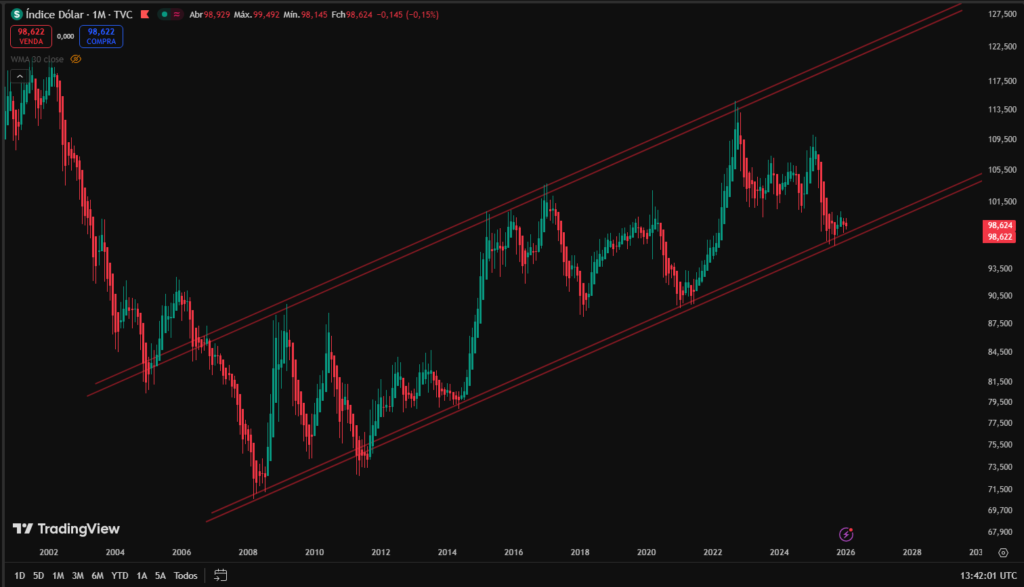
I believe the Dollar Index (DXY) will find support at historically high levels not just because of Fed rates, but because of utility. In technical analysis, when an asset gains a new fundamental utility (like being the medium of exchange for AI agents), old valuation models break. The tokenized Dollar is effectively the “TCP/IP” of finance.
FAQ: Investor Frequently Asked Questions
Is the tokenized dollar the same as a CBDC?
No. A CBDC (Central Bank Digital Currency) is issued directly by the Fed and can imply state surveillance. “Tokenized Dollars” in 2026 primarily refer to regulated private stablecoins and tokenized Treasuries, offering better interoperability and privacy.
Why does this make the dollar go up if it’s just “digital”?
It’s about demand pressure. When the entire world needs tokenized USD to pay for AI services, invest in RWAs, or hedge against local inflation, the buying pressure on the U.S. Dollar increases, driving up its global exchange rate.
Is it safe to hold tokenized dollars?
Under the GENIUS Act, U.S. issuers are required to hold 1:1 reserves in liquid assets and undergo real-time audits, making tokenized USD one of the safest ways to hold liquidity in 2026.
Conclusion: My Firm Stance on the Future of Money
To wrap up this analysis, I want to leave you with my unvarnished opinion: Dollar tokenization is the greatest U.S. economic victory since the end of the Gold Standard. I see many “experts” talking about BRICS de-dollarization, but they are missing the vital technological component: the Yuan or the Ruble lacks the digital infrastructure, trust, and 24/7 liquidity that the American stablecoin ecosystem has built.
Recommended reading:
TLT: Why Deflation and the Greatest Short Squeeze
We are entering an era where the Dollar is no longer just paper; it is code. And as a senior editor and investor, I’m telling you: don’t bet against the code that rules the world. Capital will continue to flow to the U.S., not out of “patriotism,” but because of network efficiency. The Dollar will soar because it has become impossible to operate in the digital economy without it.
If you want to dive deeper into positioning your portfolio for this shift, consult the official Federal Reserve report on Digital Financial Stability.
The future is tokenized. And the future speaks Dollars.
Related posts:
 TLT: Why Deflation and the Greatest Short Squeeze in History Could Create the Opportunity of a Lifetime in U.S. Treasuries
 The Alien Financial Crisis: The Bank of England’s Warning and the 2026 Gold and Silver Meltdown
 The Civil War at the Federal Reserve: Is Jerome Powell’s Resistance the Last Stand for Economic Stability?
 Trading Portfolio January 2026: +11.8% Growth and My High-Conviction Bet on the Dollar Paradox