
In 2026, AI IPOs like OpenAI and Anthropic are driving Wall Street sentiment, with private valuations hitting $830 billion and $350 billion, respectively. Despite record-breaking revenue growth, OpenAI is projected to lose $14 billion this fiscal year. My analysis indicates that manufactured FOMO is inflating unsustainable multiples, while established software firms offer superior risk-adjusted returns by leveraging AI to slash operational costs and expand margins.
1. The High-Stakes Race of Future IPOs: OpenAI vs. Anthropic in 2026
I have spent decades dissecting market cycles, but I have rarely witnessed a landscape as electrically charged—and potentially treacherous—as the one we are navigating in 2026. The future IPOs of generative AI giants have become the gravitational center of every institutional portfolio. We are currently witnessing what analysts call the “Year of the Hectocorns,” where companies with valuations exceeding $100 billion are finally being forced toward the public chopping block.
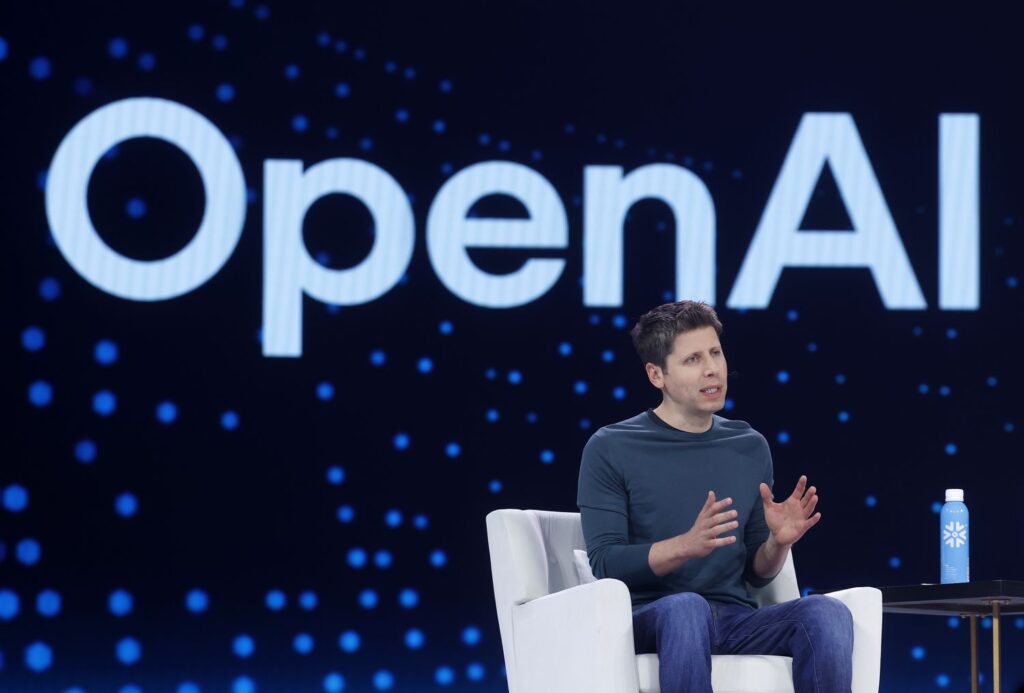
OpenAI, under the perennial spotlight of Sam Altman, remains the eye of this storm. With a private valuation currently pegged at $830 billion—threatening the trillion-dollar milestone—the company is aggressively fast-tracking its listing. The goal? To secure massive capital injections before the cost of equity rises or market saturation cools the current AI fever. Simultaneously, Anthropic, buoyed by the success of Claude 4.6, is positioning itself as the “safety-first” enterprise alternative, seeking a staggering $350 billion valuation.
I find myself asking a fundamental question: Do these valuations reflect intrinsic value, or are they the byproduct of a masterfully orchestrated marketing campaign? When we strip away the hype and analyze the filings and SEC-adjacent reports, it becomes clear that the rush to IPO isn’t just a growth strategy—it is a survival mechanism. These companies are feeding a compute-hungry beast that burns through cash at a rate unparalleled in the history of Silicon Valley.
2. The Weaponization of FOMO: How Valuations Are Being Artificially Inflated
As highlighted in the recent analysis by Alex Dito, there is a calculated “extreme panic” being fostered by these startups’ leadership. The narrative being sold to the street is binary: AI will either replace every white-collar function or your business will cease to exist. This “fear-based strategy” serves a specific financial agenda—creating a Fear Of Missing Out (FOMO) among institutional titans that eventually trickles down to retail investors.
I view this dynamic as a hall of mirrors. By proclaiming that AI will render traditional business models obsolete, OpenAI and Anthropic justify valuation multiples that defy traditional fundamental logic. If the market truly believes these two entities will monopolize the global “intelligence supply chain,” then no price seems too high. However, the reality on the ground is far more nuanced. Established legacy players possess decades of proprietary data and deeply entrenched client relationships that a LLM (Large Language Model), regardless of its parameter count, cannot displace overnight.
FOMO is the high-octane fuel allowing these firms to seek $100 billion pre-IPO funding rounds, setting a bar for performance where there is absolutely no margin for error.
3. The Cold Reality of the Balance Sheet: Industrial-Scale Losses
In my experience, novice investors often ignore the bottom line during a bull run. I must insist: OpenAI and Anthropic are not profitable, and according to 2026 projections, they won’t be for the foreseeable future. Data compiled by eWeek and Deutsche Bank suggests that OpenAI is on a trajectory to post an annual loss of $14 billion in 2026.
Compute expenditures and the “war for talent” account for roughly 75% of total revenue. This cost structure is fundamentally unsustainable without constant capital infusions. The table below illustrates the massive discrepancy between the AI “pure-plays” and the software giants that are actually generating free cash flow.
Comparative Data: AI Startups vs. Established Tech Leaders (2026 Estimates)
| Asset | Estimated Valuation | Annual Recurring Revenue (ARR) | Net Income / (Burn) | Price-to-Sales (P/S) Multiple |
| OpenAI | $830 Billion | $25 Billion | – $14 Billion | 33x |
| Anthropic | $350 Billion | $9 Billion | – $5.2 Billion | 38x |
| Microsoft | $3.8 Trillion | $310 Billion | + $105 Billion | 12x |
| Adobe | $280 Billion | $24 Billion | + $7.5 Billion | 11x |
Source: Data aggregated from Yahoo Finance, The Information, and 2026 SEC-standardized analyst reports.
I ask you: Would you rather own a company burning $14 billion annually at a 33x revenue multiple, or a titan like Microsoft, which is already netting $100 billion in profit and using that same AI technology to cannibalize its competition? From a risk-management perspective, the choice is academic. I strongly suggest reading my deep dive on why I am starting a position in Microsoft to understand how the incumbents are winning the actual war.
4. Software as the “Trojan Horse” of AI Profitability
While the media is transfixed by future IPOs, I am closely monitoring the listed software sector. The real revolution of 2026 isn’t just the creation of shiny new models; it is the massive integration of AI into existing enterprise workflows to drastically reduce COGS (Cost of Goods Sold) and expand margins.
Most vertical and enterprise software companies are now utilizing AI agents to replace repetitive back-office functions. This leads to three undeniable tailwinds:
- Headcount Optimization: AI agents are replacing tier-1 support and basic operations.
- DevOps Efficiency: Tools like GPT-5.3-Codex allow a single developer to output the equivalent of a three-person team.
- Margin Expansion: The marginal cost of onboarding a new client drops significantly when the service layer is automated.
I believe these companies represent the most compelling long-term buying opportunities. While the market is distracted by the glitter of new IPOs, consolidated firms are transforming into high-efficiency cash machines. It is the application of AI, rather than its invention, that will deliver the most robust shareholder returns over the next five years.
5. Why the IPO is Historically the Worst Time to Buy
History has taught me a painful lesson: the day of a public listing is often when Venture Capitalists “pass the bag” to the public. In the case of OpenAI and Anthropic, multiples are being artificially inflated by a narrative of total global dominance.
When a company goes public at 30x or 40x revenue with no profits in sight, the investor is paying for a level of “perfection” that rarely survives the scrutiny of quarterly earnings calls. One only needs to look at the post-IPO history of names like Uber or Rivian—years of “price discovery” and significant drawdowns followed the initial euphoria before prices aligned with earnings reality.
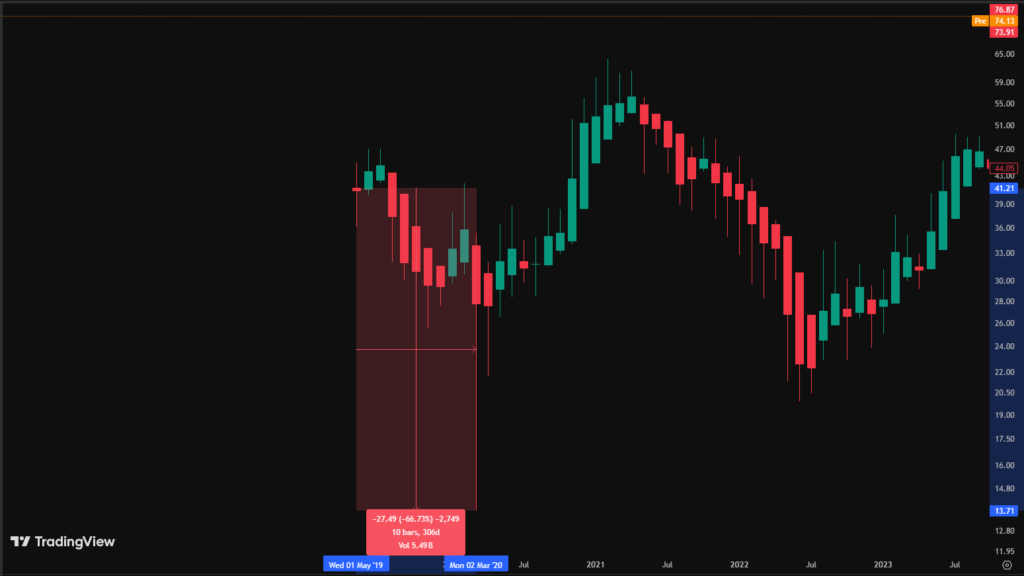
My stance is firm: buying these AI stocks on their 2026 IPO date is a gamble based on the “Greater Fool Theory.” The goal of the founders and lead underwriters (Goldman Sachs, Morgan Stanley) is to exit at the highest possible valuation. For us, the value-oriented investors, the optimal play is to wait for the “rerrating” that almost inevitably occurs 12 to 24 months post-listing.
6. The Fed, the ECB, and the 2026 Macro Launchpad
We cannot analyze future IPOs in a vacuum; they are, by definition, children of the prevailing monetary environment. As we move through 2026, with Jerome Powell’s term drawing to a close, the narrative in the halls of the Federal Reserve and the ECB has shifted dramatically. My view is clear: we are entering a definitive era of monetary easing.
Despite the “higher for longer” warnings of the past two years, inflation is finally cooling toward the 2% target, and I am convinced that central banks are now prioritizing economic liquidity over restrictive measures. This pivot is the “secret sauce” behind the $800 billion valuations we are seeing for non-profitable entities. When rates drop, the discount rate applied to future cash flows—even those a decade away—decreases, making the astronomical prices of OpenAI and Anthropic appear more palatable to institutional models.
I anticipate that the Fed and the ECB will continue to aggressively cut rates throughout the second half of 2026. This influx of “cheap money” is the primary catalyst that will allow these massive burn rates to be subsidized by the public markets. While some fear a “house of cards” scenario, I believe this liquidity surge acts more like a launchpad for the AI sector. As noted in the video by Alex Dito, we are in a moment of maximum transition—and in my experience, the end of a tightening cycle is precisely when the most significant fortunes are forged for those who understand where the liquidity is flowing.
For additional context on the global landscape of these massive listings, see the guide on 2026 Hectocorns at Yahoo Finance.
FAQ: Frequently Asked Questions on AI IPOs
1. Is it worth buying OpenAI shares on the IPO day?
Generally, no. High-profile IPOs like OpenAI often debut with valuations heavily inflated by FOMO. Historical data suggests a significant price correction usually occurs within the first year as early investors take profits.
2. When will OpenAI become profitable?
Internal projections suggest the company may continue to operate at a loss until 2029 or 2030, given the exponential costs of R&D and the infrastructure needed to maintain technological leadership.
3. What is the main strategic difference between OpenAI and Anthropic?
OpenAI focuses on massive consumer scale (ChatGPT), whereas Anthropic markets itself toward the enterprise sector with a focus on “Constitutional AI” (safety and ethics) to attract risk-averse corporate clients.
4. How do traditional software companies benefit from the AI boom?
They integrate AI to automate internal processes, which slashes operating expenses and boosts net margins, making them much more stable long-term investments compared to pure-play AI startups.
Conclusion: Navigating the Gap Between Innovation and Irrational Exuberance
I conclude this analysis with a heavy dose of caution. Artificial Intelligence is undeniably the most disruptive technology of our era, but technological disruption does not always translate into immediate shareholder alpha. OpenAI and Anthropic are marvels of engineering, but as 2026 investment vehicles, they appear to be rushed to the public markets out of a desperate need for liquidity.
My opinion is clear: Do not be blinded by the narrative that these companies will “eat the world” alone. History shows that incumbents adapt. I would much rather place my bets on established software firms using AI to become leaner and more profitable today, rather than on firms promising profits a decade from now while burning billions in the interim.
Stay disciplined, ignore the FOMO, and remember: in the stock market, the price you pay determines your return. And in 2026, the price of AI seems to be touching the stars while its feet have yet to touch the ground.
Disclaimer: This article reflects my personal opinion and technical analysis based on 2026 market data. It does not constitute direct financial advice. Investing in IPOs and high-growth tech involves significant risks of volatility and capital loss. Always consult with a certified financial advisor before making investment decisions.
Related posts:
 The Civil War at the Federal Reserve: Is Jerome Powell’s Resistance the Last Stand for Economic Stability?
 Trade War 2.0 Greenland: How to Shield Your Portfolio Against New NATO Tariffs and Arctic Volatility
 The Greenland Crisis: How Trump’s New Tariffs Could Wreck Your Tech Portfolio Today
 The End of the Dovish Illusion: Why the January 2026 FOMC Meeting Left Markets in Limbo