
As of January 2026, navigating the global equity market requires a surgical distinction between price and value. This analysis evaluates six industry leaders: Microsoft (MSFT), Amazon (AMZN), Hermès (RMS), Meta (META), Mastercard (MA), and Ferrari (RACE). While MSFT, AMZN, and RMS currently trade at premiums requiring technical corrections (PERs of 28–42), META, MA, and RACE offer compelling entry points. This Investment Strategy 2026 prioritizes durable competitive advantages (Moats) and free cash flow generation for the next decade.
1. The Art of Patience: Why Value Discipline Defines My Investment Strategy 2026
In the financial landscape of 2026, the noise of algorithmic trading and instantaneous AI-driven news cycles can easily distract even the most seasoned investor. However, my Investment Strategy 2026 remains rooted in a timeless principle: the quality of the business is paramount, but the price you pay determines your ultimate alpha. We are living in an era where “Moats”—the structural barriers that protect a company from competitors—are being tested by rapid technological shifts.
I firmly believe that the most successful investors are not those who trade the most, but those who wait for the fat pitch. I often look back at historical examples of discipline, such as the legendary approach of Ronald Read and his stock-picking philosophy, which proves that simplicity and consistency outperform complexity. My current stance is one of selective aggression. I have identified six companies that I believe will not only exist but thrive in 2036. Yet, as a senior analyst, I refuse to chase rallies. Today, I will break down why I am pulling the trigger on some, while keeping my powder dry for others.
2. The “Wait and See” Trio: Microsoft, Amazon, and Hermès
2.1. Microsoft (MSFT): The Ubiquitous Operating System of the AI Era
Microsoft remains the gold standard of enterprise software. In my view, it is the most resilient “utility” of the 21st century. With a PER of 28 and a CAGR of 17%, its valuation reflects its dominance. The Moat here is built on high switching costs and an ecosystem that is now inseparable from global productivity.
In 2026, Azure has solidified its position as the backbone of corporate AI implementation. However, the Federal Reserve’s current stance on long-term neutral rates suggests that a 28x multiple might face compression if earnings growth shows even a slight deceleration. I am looking for a 10% to 12% correction to feel comfortable expanding my position. Microsoft is a company you own for life, but you don’t buy it at the peak of an AI-fueled hype cycle.
2.2. Amazon (AMZN): Logistics Mastery and AWS Dominance
Amazon has successfully transitioned from a low-margin retailer to a high-margin services powerhouse. Trading at a PER of 30 with a robust CAGR of 20%, the stock is priced for high growth. The Moat is two-fold: an irreplicable global logistics network and the cash-cow that is AWS.
My concern in 2026 isn’t the business model—which is brilliant—but the macroeconomic headwind of global labor costs and energy transitions. While the “flywheel effect” remains intact, I prefer to wait for a technical pullback toward the 200-day moving average before committing more capital. I am bullish on the 10-year horizon, but cautious for the next six months.
2.3. Hermès (RMS): The Unreachable Peak of Luxury
Hermès is a case study in Veblen goods. With a PER of 42 and a CAGR of 10%, it is the most expensive stock in my coverage. Its Moat is its brand equity and absolute control over supply. Unlike other luxury players that diluted their brand through over-accessibility, Hermès remains the ultimate status symbol.
However, a multiple of 42x earnings leaves zero room for error. While the ultra-high-net-worth (UHNW) segment is resilient, the current valuation assumes historical growth rates will persist indefinitely without a hitch. I am waiting for a “market tantrum” to pick up RMS shares at a more reasonable 35x multiple.
3. The “Buy Zone”: Meta, Mastercard, and Ferrari
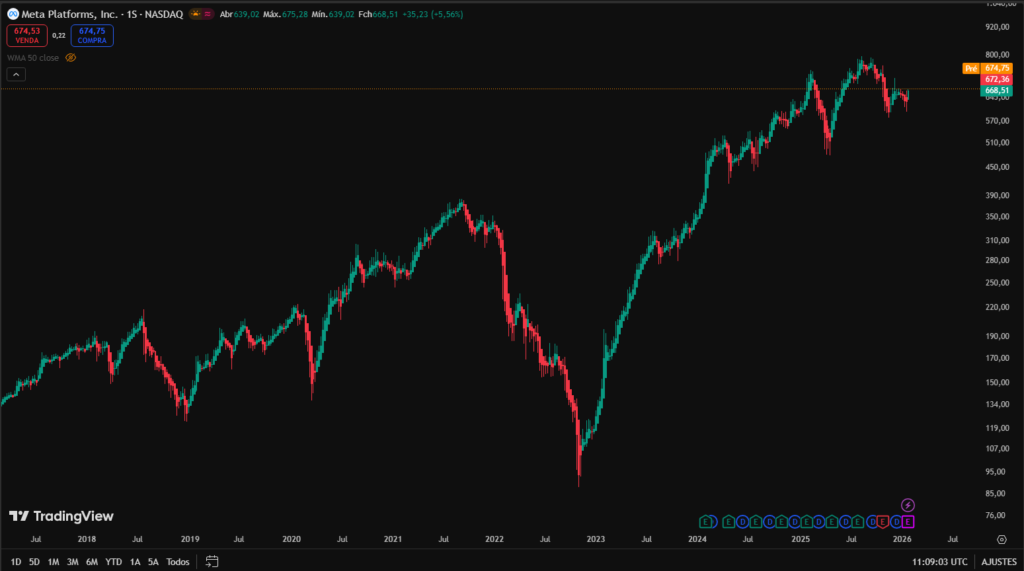
3.1. Meta Platforms (META): The Network Effect 2.0
Meta is currently the most misunderstood giant in the “Magnificent” group. At a PER of 22.5 and a CAGR of 12%, the valuation is remarkably attractive compared to its peers. Its Moat is the Network Effect; with billions of users across Facebook, Instagram, and WhatsApp, the data moat is insurmountable.
By 2026, Meta’s pivot to open-source AI (Llama) has positioned it as a leader in ad-tech efficiency. I believe the market is still discounting the massive monetization potential of WhatsApp Business. Meta is my top pick for 2026 because it combines a reasonable valuation with a dominant market position.
3.2. Mastercard (MA): The Digital Toll Bridge
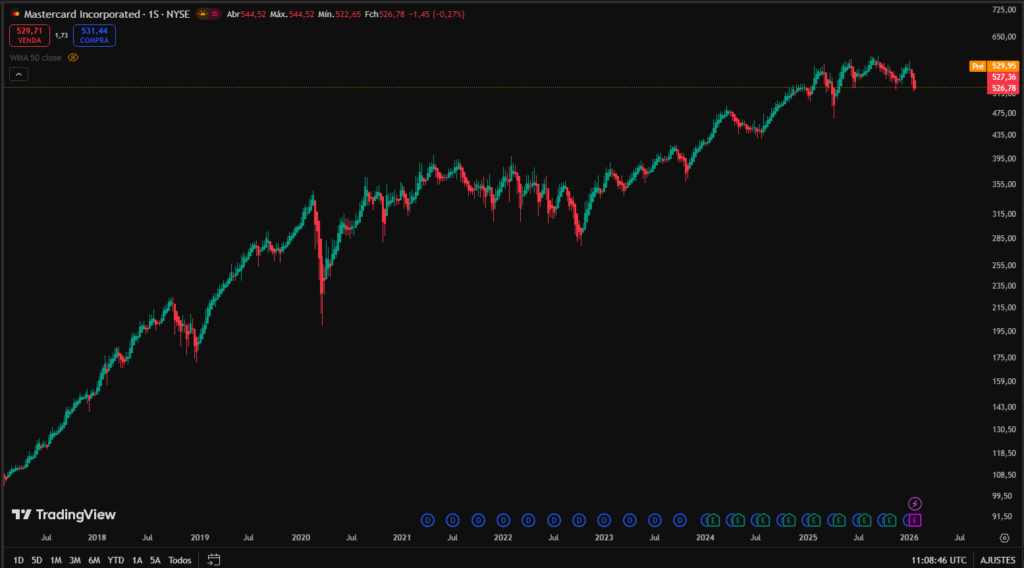
Mastercard is essentially a tax on global consumption. With a PER of 27 and a CAGR of 15%, it offers a perfect blend of growth and stability. The Moat is the infrastructure. Building a global payment rail that connects millions of merchants and thousands of banks is a barrier to entry that even the most innovative fintech startups struggle to breach.
In a world moving toward total digitalization of currency, Mastercard’s “asset-light” model ensures high margins regardless of the inflationary environment. At current prices, I find MA to be a “Buy and Forget” asset.
3.3. Ferrari (RACE): The Ultimate Pricing Power
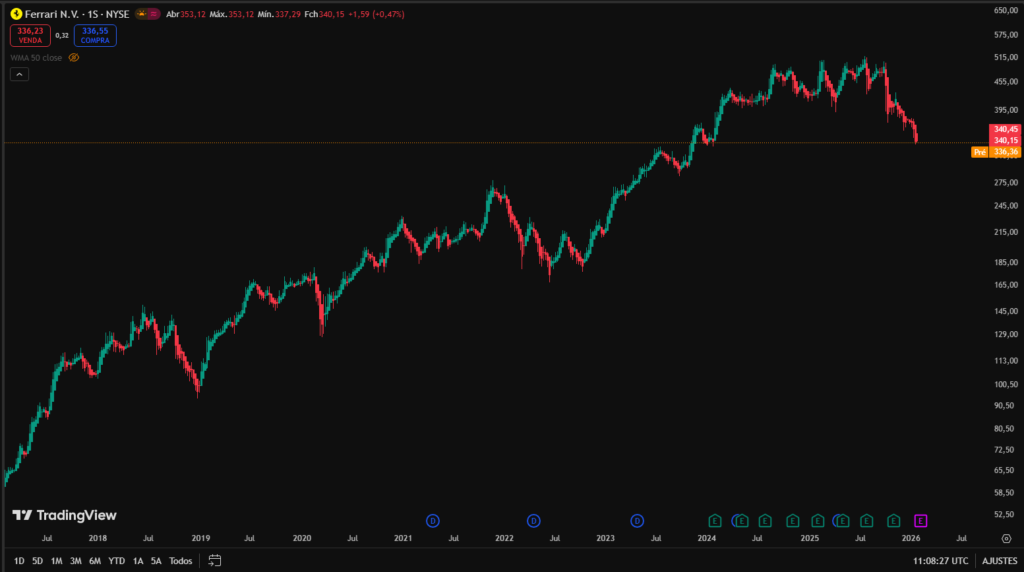
Ferrari is not a car company; it is a luxury icon that happens to make cars. With a PER of 30 and a CAGR of 11%, the numbers are stellar. Its Moat is exclusivity. With order books filled until 2028, Ferrari has total visibility into its future revenue.
According to Morningstar’s latest equity research, companies with “Wide Moats” and high pricing power are the best hedges against economic volatility. Ferrari can raise prices by 10% tomorrow, and its customers will still wait three years for a car. RACE is currently at an interesting price point for those focused on a 10-year wealth accumulation strategy.
4. Comparative Data Analysis: The 2026 Watchlist
The following table summarizes the key metrics from my current research, emphasizing why price discipline is the core of my Investment Strategy 2026:
| Company | Ticker | Forward PER | 5Y CAGR | Recommendation | Primary Moat Source |
| Microsoft | MSFT | 28 | 17% | Hold/Wait | Switching Costs |
| Amazon | AMZN | 30 | 20% | Hold/Wait | Network / Scale |
| Hermès | RMS | 42 | 10% | Hold/Wait | Brand Intangibles |
| Meta | META | 22.5 | 12% | Accumulate | Network Effect |
| Mastercard | MA | 27 | 15% | Accumulate | Efficient Scale |
| Ferrari | RACE | 30 | 11% | Accumulate | Pricing Power |
5. Why These Companies Will Rule the Next Decade
The world of 2036 will be vastly different, but the human needs for communication, convenience, status, and transaction will remain. These six companies have built fortresses around these needs.
- Technology & AI: MSFT and META are not just participating in the AI revolution; they are defining its infrastructure and interface.
- The Luxury Divide: As global wealth concentrates, the “desirability” of RMS and RACE only increases due to their inherent scarcity.
- The Financial Backbone: AMZN and MA represent the physical and digital flow of goods and money.
Even the best business can be a bad investment if bought at the wrong time. This is the cornerstone of my Investment Strategy 2026. I am not looking for a “quick flip.” I am looking for businesses that I can pass down to the next generation, provided I can secure them at a fair price.
FAQ: Frequently Asked Questions for the 2026 Investor
Why is the P/E ratio (PER) so important for these “Wide Moat” companies?
The PER tells us how much we are paying for each dollar of profit. For companies like Hermès, a high PER is normal, but paying too much above the historical average significantly reduces your long-term Margin of Safety.
Is it risky to wait for a correction in Microsoft or Amazon?
The risk is “opportunity cost”—missing out on further gains. However, in my experience, the market always offers a better entry point to those who are patient. Chasing a stock at all-time highs often leads to years of underperformance.
How does Meta’s “Network Effect” protect it in 2026?
The Network Effect means that the value of the platform increases as more people join. With over 3 billion active users, the cost for a user to leave and go to a smaller competitor is too high, ensuring Meta’s dominance in digital advertising.
Can Ferrari sustain its growth in an electric vehicle (EV) world?
Yes. Ferrari’s 2026 lineup shows that their brand transcends the internal combustion engine. Their customers buy the “experience” and the “badge,” regardless of the powertrain, allowing them to maintain industry-leading margins.
Conclusion: Final Verdict on My 2026 Portfolio Moves
Success in the markets is 10% intellect and 90% temperament. My Investment Strategy 2026 is simple: I am prioritizing Meta, Mastercard, and Ferrari right now because their current valuations provide a sufficient margin of safety. I love Microsoft, Amazon, and Hermès as businesses, but I will remain a disciplined observer until the market offers a more attractive entry point.
We are investing for 2036, not next week. By focusing on wide-moat companies and insisting on a fair price, we position ourselves to benefit from the greatest wealth-creation machine in history—the power of compounding.
Disclaimer: This article reflects my personal views and technical analysis for educational purposes only. It is not financial advice. Investing involves risk, including the loss of principal. Please consult with a certified financial advisor before making any investment decisions.
Related posts:
 My 2026 Bet on General Mills (GIS): Why Defensive Stocks Are My Sanctuary in an Overheated Market
 Constellation Software (CSU): Why I Am Aggressively Doubling Down on This Generational Opportunity Amidst Extreme Market Fear
 Is Novo Nordisk (NVO) Still a Buy in 2026? My Deep Dive into the Giant Curing Obesity
 Why Constellation Software is My Only Choice: The Death of Horizontal Software and the Resilience of VMS